New 2013 Introductions
Primarily from our own wild seed collections divided into 3 sections:
Herbaceous and tuberous
|
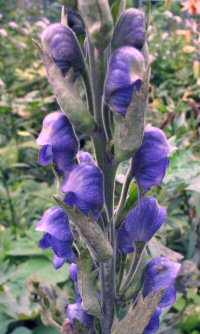
Aconitum ferox GWJ9403 is a species of monkshood we found growing at Sandakphu on the border between Eastern Nepal and Northern Indian. Where we collected the seed from plants 1.3m tall with deeply divided foliage. A result of the dark purple-blue hooded rounded and beaked flowers, with pale lower bracts held in a terminal spike.
|
|
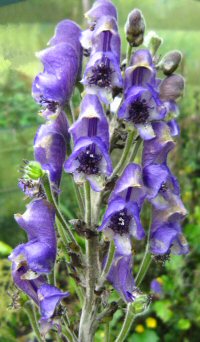
A. violaceum v. robustum GWJ9393 was another species collected from the same area, at around 3,100m. Again from plants 1.3m tall, but with long terminal racemes of blue helmet-shaped flowers.
|
|
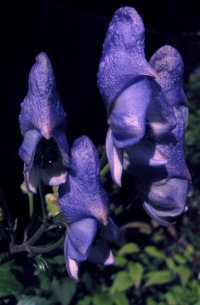
A. senanense v. paludicola BSWJ10866 is robust species we found in the cold north of Honshu, Japan in the autumn of 2005. Where they formed plants with long arching stems to 2m long in the shaded conditions, with large shallowly lobed leaves and large terminal panicles/or axillary racemes of sizeable blue-purple hooded flowers carried July-September.
|
|
Adiantum aff. fimbriatum BWJ 8184 is a creeping/colonising species I collected in China in 2000, which we had planted out in a moisture retentive shady spot, where it has thrived to produce its triangular fronds of small triangular pinnules fringed on their apex with triangular teeth.
|
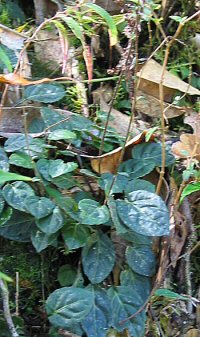 |
Ainsliaea chapaensis BSWJ11720 is a small woodland semi-evergreen perennial species. With a basal rosette of small heart-shaped grey-green leaves and upright stems with the characteristic narrow-petalled ray-flowers with scaly calyces.
|
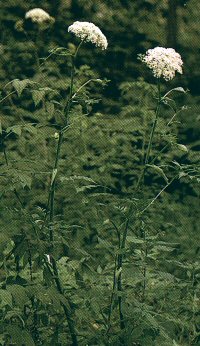 |
Angelica cartilaginomarginata BSWJ12663 originates from one of our seed collections gathered from Waraksan South Korea. Where it formed small slender plants to 80cm tall with green stems in this form. Flowering in a flat topped umbel of many small white flowers in July-August.
|
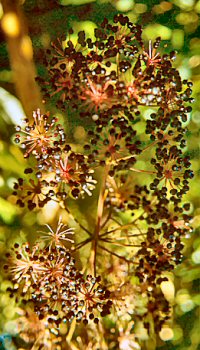 |
Aralia cordata v. sachalinensis BSWJ4773 is a stout growing slightly hairy, clump-forming architectural perennial from the northern end of the species’ distribution. With strong stems to 3-4m, bearing large alternate bipinnate leaves, topped in August by terminal racemes of green pubescent flowers soon followed by globose blue-black fruit.
|
|
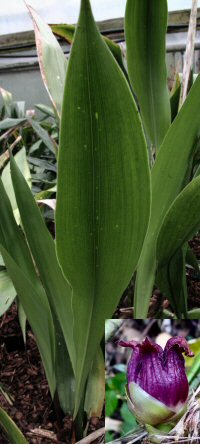
Aspidistra aff. attenuata BSWJ2001 emerges from a slowly creeping thickened scaly rhizome. Which we collected from the Experimental Forest, part of The Taiwan University at Hsitou in the winter of 1993. Where it formed a large colony which enveloped a huge boulder, only obtaining moisture from the debris and leafmould accumulated above its rhizomes. With faintly spotted and streaked leaves to around 1m long held on short petioles encased in a purple sheath, bearing purple-yellow edged flowers at ground level.
|
|
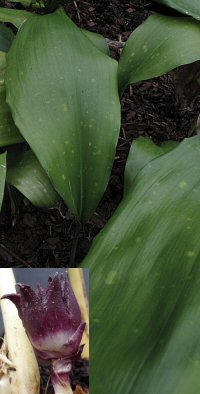
A. species from Thailand BSWJ6645 originating from one of our collections gathered in 1998 from almost the summit of the infamous Doi Pha Hom Pok Thailand's second highest peak which is in the Golden Triangle. Where it formed large colonies of unusually lightly mottled and faintly striped leaves, which only have short petioles bearing the broadly elliptic leaves. Spreading from a thick rhizome sometimes with the distinct campanulate flower at ground level followed by large grape-sized fruit.
|
|
A. tonkinensis emerges from a thin slowly creeping rhizome. Forming small colonies of upright parchment textured glossy leaves which are oblong-lanceolate 13-20 cm long by 4-5.5 cm wide on petioles to 13 cm long. Bearing solitary campanulate 6-lobed purple flowers late summer to autumn.
|
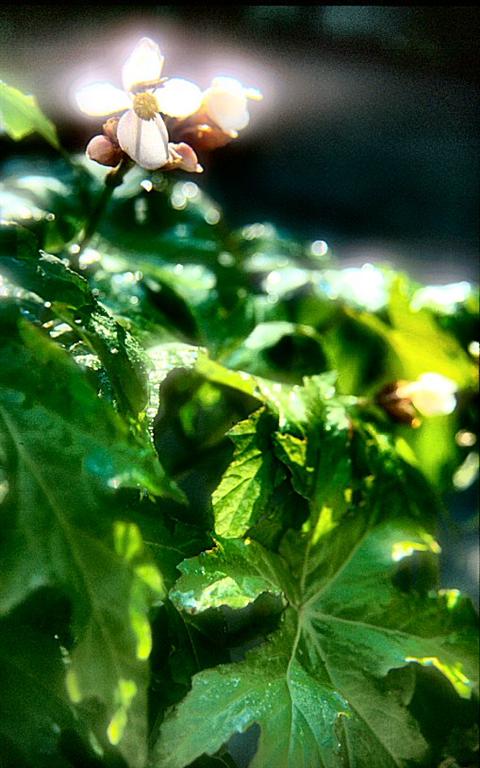 |
Begonia panchtharensis BSWJ2692 was formerly identified as B. sikkimensis, but now considered to be a recently described species first discovered in eastern Nepal. With large deeply lobed fleshy leaves to 40cm long on darkly mottled stems. Bearing axillary cymes of pink flowers.
|
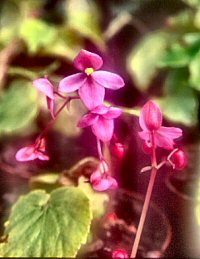 |
B. wynn-jonesiae 'Pink Lady' BWJ8119 originates from seed I collected in Central Sichuan, China, but has only recently been named for my better half, by Julian Shaw who identified it as an undescribed species. In the wild this species was growing on very shady vertical rocks, forming small clumps of reddish stems to 20cm tall, with pale green palmate leaves and inflorescences, of at that time pinkish flowers and winged seed heads, held just above the leaves.
|
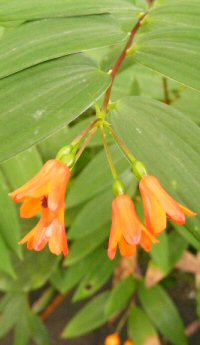 |
Bomarea distichifolia is a small non-climbing species which we bought from a British nursery as an ericaceous shrub.
|
|
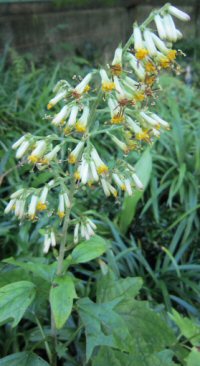
Cacalia farfarifolia CWJ12849 is an unusual woodland species, with several irregularly toothed and deeply lobed leaves, which are cobwebby below as are the juvenile branched stems to 1m tall. With a sizeable acutely branched terminal panicle of white to yellow tubular-shaped ray flowers.
|
|
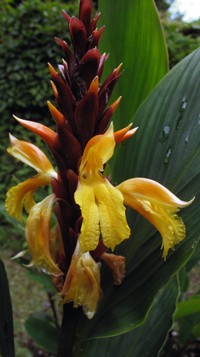
Cautleya spicata 'Bleddyn's Beacon' BSWJ2408 is a reintroduction after a very long absence. We were unable to satisfy demand on first introducing this collection (without a cultivar name) as the plant’s energy is focused on its flowering rather than increasing at the root. Please see our formal description at the end section of this plant list.
|
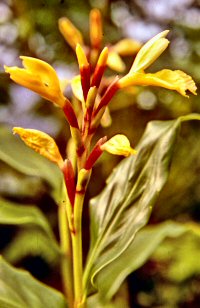 |
C. gracilis 'Crûg Gold' BSWJ7186 is one of our collections made on one of the high mountains in the Golden Triangle. Performing perfectly well for us without too much protection from the elements with its slender stems terminating in golden yellow blooms for months every year.
|
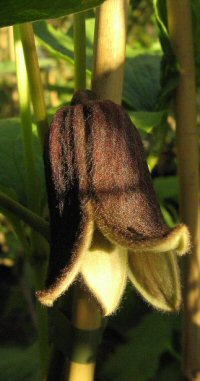 |
Clematis fusca v. coreana BSWJ8431 is undoubtedly a gem of fairly small stature, an herbaceous non climbing woodland species 80-100cm tall. Bearing large heart shaped leaves fringed with golden hairs, but topped with long stalked most unusual flowers. Which are a golden-shaggy brown in appearance long lasting and pendant, in its largest form in this very hardy variety we collected from Soraksan South Korea in 2001.
|
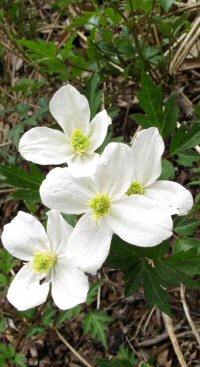 |
C. gracilifolia BWJ8002 was a collection from the previous year I gathered the seed of in Sichuan at high altitude. Where this small climbing species only formed small plants 2-4m tall with downy deeply lobbed ternate foliage and sizeable (6cm) white flowers.
|
|
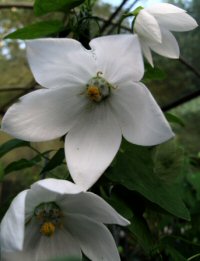
Codonopsis grey-wilsonii 'Himal Snow' is an old favourite which we have grown for a long time, with congested very slender twinning stems arising from its fleshy rootstock. Bearing ovate shallowly serrated leaves with very large in comparison, wide saucer-shaped, white flowers.
|
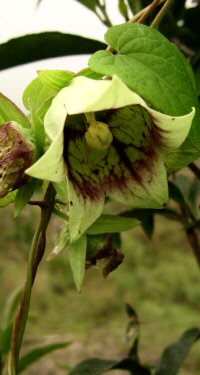 |
C. aff. javanica FMWJ13329 is the species we see around the northern parts of Vietnam where we find the large purple-red fruit, resulting from the creamy red veined bell-flowers.
|
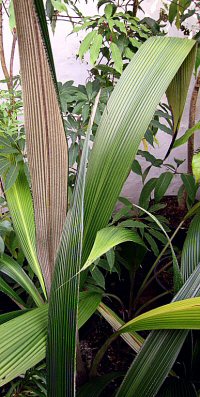 |
Curculigo crassifolia from Vietnam HWJ683 we were amazed to see this species in the mountains of northern Vietnam, where they are relatively common where the surrounding vegetation allows at 2000m. The exact same altitude that we find them at in the eastern Himalayas.
|
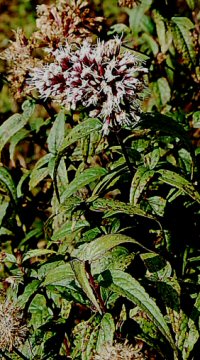 |
Eupatorium sp. nova from Vietnam FMWJ13428 like the preceding, is relatively common where the surrounding vegetation allows, yet is not so altitudinally restricted. A small species with slender serrated foliage and wide terminal inflorescences of pink flowers.
|
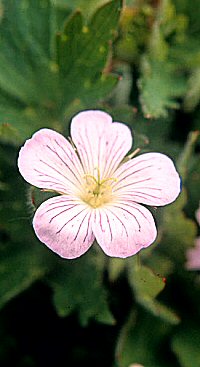 |
In contrast Geranium shikokianum v. quelpaertense 'Crûg's Cloak' BSWJ1234 was just a frozen shrivelled leaf poking through the snow on the summit of the only mountain (volcano actually) where it is native to. On Hallasan the highest peak in South Korea, on the island of Chejudõ. A variety only propagated from division as it hybridises so readily. Please see our formal description at the end section of this plant list for more detail.
|
|
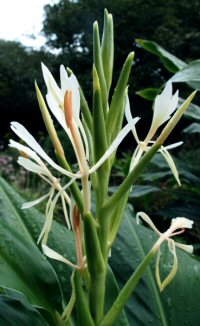
We can take no credit for Hedychium 'Helen Dillon' other than a determination to differentiate this superlative hybrid from H. forrestii which it appears to be confused with. H. forrestii is common in the area of northern Vietnam where we work, bearing pure white flowers for a long period from October to December, far too late to form seed for us to collect. To date all the entries in the RHS Plant Finder as H. forrestii that I have followed up turn out to be this hybrid, hence in an attempt to avert further confusion I have named it after the dear friend who generously gave us a slice of her plant some years ago. Please see our formal description for more details.
|
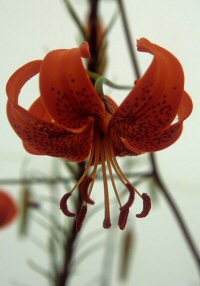 |
Lilium davidii may not be new to cultivation, but is new to our offerings, taking us an inexplicably long time to bulk up.
|
|
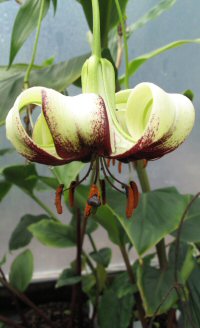
L. aff. majoense KWJ12064 on the other hand was an unexpected additional find on the road leading to Sapa northern Vietnam at 1700 m in 2007. Where it grew on shady vertical cliffs, rooting into cracks and narrow shelves forming slender stems with scattered lanceolate leaves, 1-2m tall. Bearing 1-many large yellow pendant trumpet flowers with recurving tepals, stained red in the base August-October.
|
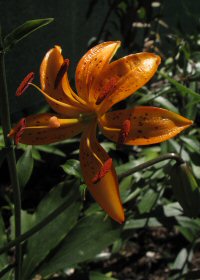 |
L. medeoloides BSWJ4184 is one of several collections gathered from Korean forests. Arising from distinct small bulbs composed of narrow articulated scales, to an upright stem eventually 75cm tall carrying a whirl of up to 12 leaves. Below a whirl of orange irregularly red spotted turk's-cap flowers.
|
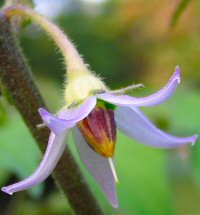 |
Lycianthes biflorum FMWJ13059 is another small woodlander, which we find in the high altitudinal forests of northern Vietnam. Generally about 50cm tall with dark foliage, bearing bright red fruit when we are there, the result of the lilac summer flowers.
|
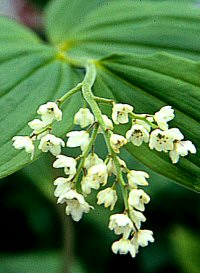 |
Maianthemum forrestii certainly flourishes in woodland. The hairy stems of clasping elliptic leaves terminating in a raceme of green-whitish starry flowers in spring, followed by fleshy red fruits.
|
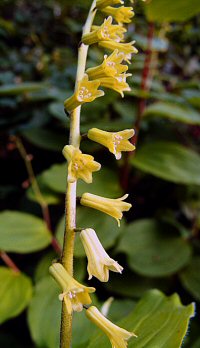 |
M. henryi BWJ7616 is my own collection of this species with stems that terminate in a spikes of yellowish tubular highly scented flowers in spring, followed by fleshy red fruits.
|
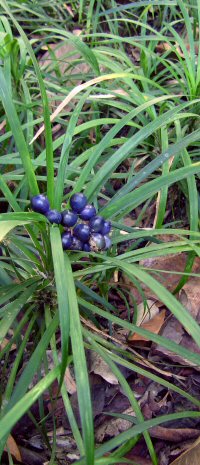 |
Ophiopogon aff. latifolius KWJ12031 is an unusual species which we collected seed of on Mt. Bavi close to Hanoi. Forming clumping plants with dark green ribbed leaves to 50cm long, 2.5cm wide, with a terminal inflorescence of bluish tinted flowers from August.
|
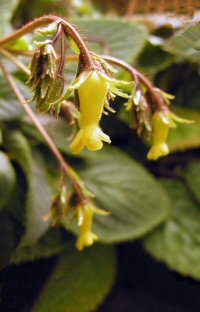 |
From further north in the high mountains Oreocharis aurea BSWJ11718 is one of the many rosette forming gesneriads, with tubular yellow flowers in this species.
|
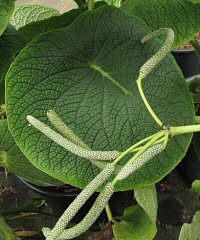 |
Piper heydei BSWJ10445 could not be much more of a contrast albeit another woodlander. Our first offering of this primitive genus which we collected in the steamy forests of Guatemala, so dramatic that we just had to try it, for its sensational large orbicular rugose foliage on meter tall stems and long pendant catkin-like inflorescences.
|
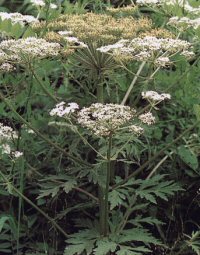 |
Pleurospermum camtschaticum BSWJ12627 originates from our collections from Ullüngdõ South Korea. Growing under small trees on steep slopes, forming slender plants 1.2m tall. Flowering in a flat topped umbel of many small white flowers in July-August.
|
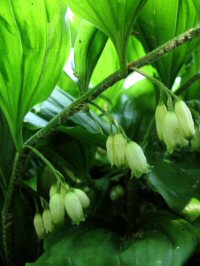 |
Polygonatum hirtum 'Robustum' is a distinct robust form of the eastern European species which we have grown into a wide colony over many years in our gardens. A form capable of 1.2m in good conditions, flowering late April-May.
|
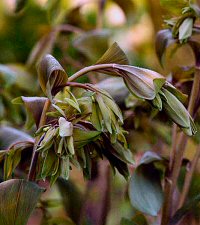 |
P. multiflorum 'Ramosissima' is yet another European species, sometimes encountered in this form. With strongly arching stems to 1m, of alternate leaves bearing from their axils, white green tinged trumpet-like flowers in racemes (on mature plants) sometimes leafy, during May and June.
|
|
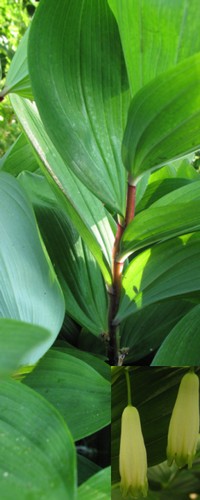
P. odoratum 'Flatmate' BSWJ857 hails from another continent, one of our earliest collections of this species on our first visit to Korea. A very distinct upright form with wide unmistakably flattened stems. For more details please see our formal description at the end.
|
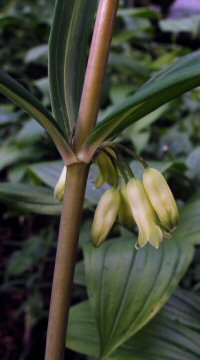 |
P. verticillatum BSWJ2147 is another Asiatic collection, this time a collection from our first Himalayan expedition back in 1994.
|
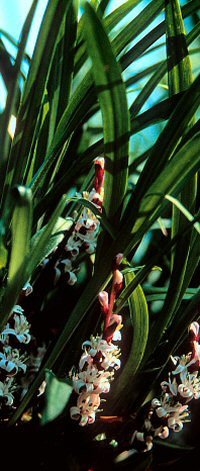 |
Reineckea aff. carnea 'Crûg's Linearleaf' BWJ8029 will be my final selection/collection from China collected in 2000. Have we kept the best till last? We will let you be the best judges of this, its certainly the most distinct, so much so we are not sure if the species is correct even. Please see our formal description at the end.
|
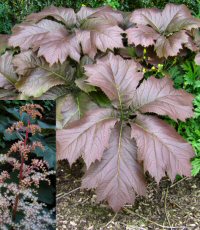 |
Rodgersia podophylla 'Crûg Colossus' BSWJ10909 offers no challenge in identity, just be careful of the space though, as the foliage is at least a meter across when mature. Not to mention the foliage colour which is red on emerging, for several months for us, but bound to vary with growing conditions. Please see our formal description at the end section of this plant list for more details.
|
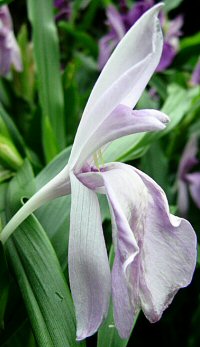 |
Roscoea are proving to be promiscuous, our R. auriculata × purpurea pale will be the first of a long line of introductions of this rewarding group of gingers.
|
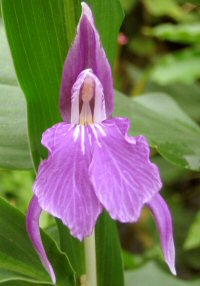 |
R. cangshanensis BWJ7848 on the other hand is suffering an identity crisis. Possessing a strong constitution, it quickly forms healthy clumps of fairly slender stems with stem-clasping leaves. Bearing violet-pink, white striped flowers 5cm long on very long slender tubes, for many months through the summer for us until November.
|
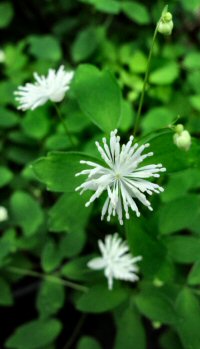 |
Thalictrum urbaini BSWJ7085 originates from one of the highest mountain passes in Taiwan. A demure species which clings on to moist rocky surfaces in cool shade where they only attain a height of 5cm, taller in gardens to 15cm.
|
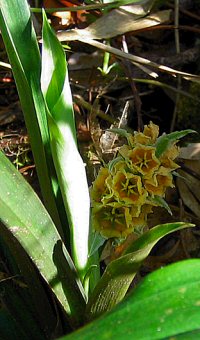 |
Tupistra grandistigma BSWJ11773 is more of an intriguing woodland plant than a beauty, that carry lanceolate thick-textured leaves to 50cm long. With bracted inflorescences of unusually scented flowers March-April which in turn form spikes of orange fruit.
|