New 2013 Introductions
Primarily from our own wild seed collections divided into 3 sections:
Woodies including some climbers
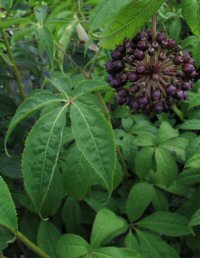 |
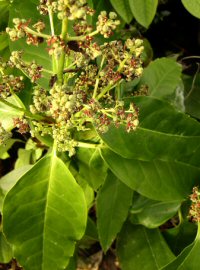
Acanthopanax (Eleutherococcus) giraldii BWJ8091 is a relatively small to medium sized species, to an eventual height of 3m, with dark slender upright stems dense with bristle-like prickles. Which I collected seed of on E'meishan in 2000. Where the slender stems bore 5-foliate narrowly leafleted leaves (giving an affinity to its close relative, Schefflera) and large rounded umbells of black berries.
|
|
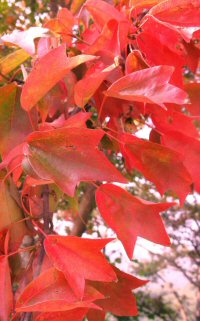
Acer buergerianum BSWJ12676 was from seed collected from very colourful specimens we encountered on our travels around South Korea in 2010.
|
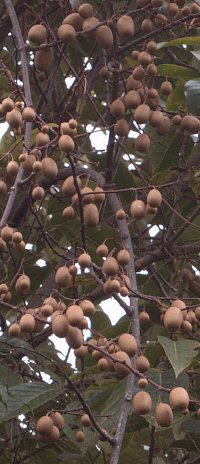 |
Actinidia petelotii FMWJ13137 was also conspicuous for its red colouration, this time for the densely red bristly new shoots. A twining climber with serrated ovate hairy leaves 10cm long, which bore a mass of small unmissable fruit only 3cm long.
|
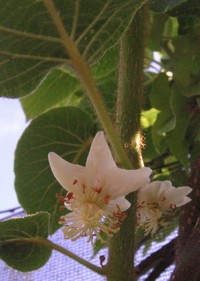 |
A. setosa BSWJ3563 should also be mentioned here, as it is merely a long overdue identification. Merely is not a word that the Taiwanese appear to associate with this species, as they are concentrating so much effort in selecting fruiting forms that they reckon will supersede A. deliciosa.
|
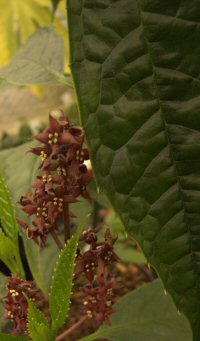 |
Aucuba aff. chlorascens BSWJ11815 will be the second species that we will have introduced from our collections. In our gardens they have formed slender well clothed evergreen shrubs with stiff narrow conspicuously veined and toothed dark green foliage. Originating from the forests on the slopes of Fansipan the highest mountain in Vietnam.
|
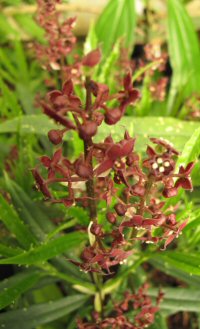 |
Meanwhile A. himalaica v. dolichophylla Og95038 is a much cherished collection by Mikinori Ogisu, gifted to us by his great friend Roy Lancaster. This is an even more slender species with lanceolate lightly spotted toothed leaves.
|
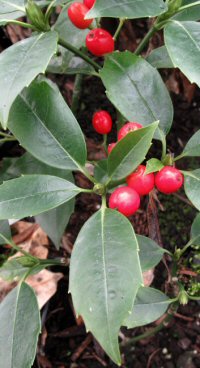 |
A. japonica v. borealis female CWJ12898 on the other hand has more orbicular dark glossy un-spotted foliage. Generally seen as an understorey shrub to only 30-40cm tall, where we have seen it forming wide sprawling self-layering colonies in the cold forests of northern Honshu. With contrasting red fruit when pollinated in this female clone.
|
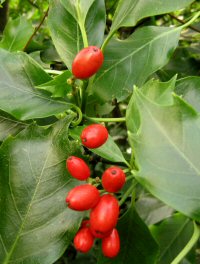 |
A. japonica 'Dentata' has been growing in our walled garden for at least a couple of decades, where it is heavily shaded by a magnolia. Here it manages to dazzle us with its dependable display of bright red fruit every winter to spring.
|
 |
A. japonica 'Lance Leaf' is an undeniably useful male pollinator, described as possessing lanceolate foliage. After many years of tracking this clone down and being disappointed by so many mis-named accessions, I have to admit that I am not impressed with the foliage when compared to 'Salicifolia' (female counterpart).
|
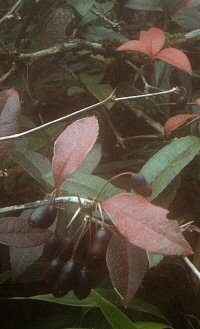 |
Berberis subacuminata FMWJ13290 was a puzzlement for the boffins when we first discovered it in 2007 on the second highest summit of the Hoang Lien Mountain Range in northern Vietnam. Where it only inhabited the most exposed areas, only forming small sprawling evergreen shrubs with narrowly elliptic serrated foliage and ellipsoid dark fruit.
|
|
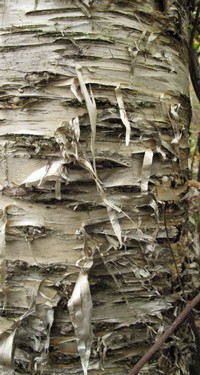
Betula ermanii BSWJ12600 was also dwarfed by exposure on the Korean ridge we collected the seed. Bearing many white twiggy branches of tiny leaves above the startlingly silver papery bark-covered trunks.
|
|
B. michauxii KA 23 is naturally small, this seed was given to us by Ness Botanic Gardens grown from seed raised plants collected by Kenneth Ashburner in Newfoundland.
|
|
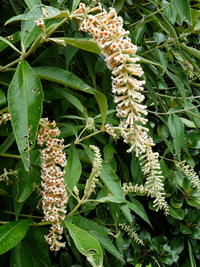
Buddleja paniculata from Sikkim GWJ9286 was described in my notes as been common in the area we collected the seed, of this wonderfully white woolly species deep in the Lachen Valley in northern Sikkim in 2002. In the wild it formed much branched shrubs with silvery long pointed ovate foliage held on rounded white stems. With long paniculate inflorescences held terminally and in the apical axils, which had held the long tubed white-yellow flowers widely flared at their throats which are a deep yellow-orange on their interiors.
|
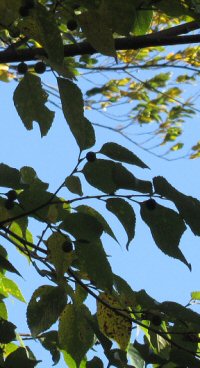 |
Celtis choseniana BSWJ12774 was a temple tree, that is to say that it had been protected for long enough to be a sizeable mature tree by its proximity. It had formed a wide spreading tree well furnished with ovate serrated leaves, prominently pinnately veined, accompanied by a generous crop of black orbicular fruit on our visit.
|
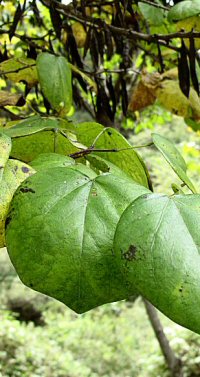 |
Cercis chinensis BSWJ12665 was a collection from earlier on the same trip from much smaller plants, with few of the glossy heart-shaped leaves left by the time we were there, but the branches were smothered in the flat seed capsules.
|
|
Chloranthus glaber BSWJ11102 was from Japan where we occasionally see this small shrubby species growing in the warmer forests. With upright green stems to 80cm, with swollen nodes hosting the opposite pairs of lustrous dark green serrated leaves.
|
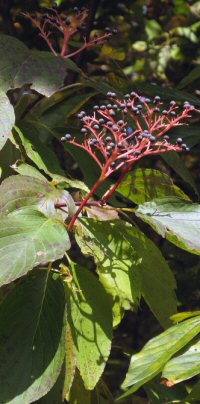 |
Cornus macrophylla is so frustrating, I have lost count of how many collections we have gathered of this beautiful tree. As we see the bluish fruit set on bright red stalks all over the floor each autumn we venture into the Asiatic forests. Imagine our surprise on achieving some germination with some gifted seed while our own never budges.
|
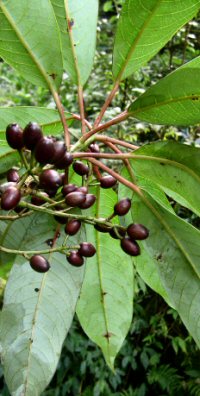 |
Daphniphyllum cf. himalense KWJ12313 & KWJ12244 causes a shiver up my spine each time I walk past the plants (still in our tunnels). I’d like to keep them all their too good to sell, but alas we only have a hundred acres of land left. They are not D. himalense, but that is as close as I can get to an identification, most likely to be a new species, but they are a nightmare to identify. Bearing 17cm long oblong leaves dark and glossy above, veins prominently impressed, while the undersides are white. The infructescences were short while the fruit were only just ellipsoid(-orbicular), with no sign of the calyces.
|
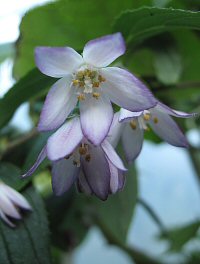 |
Deutzia bhutanensis HWJK2180 is a charmer, that was misidentified until it opened its distinctive purple edged flowers. Originating from our eastern Nepal expedition with Dan Hinkley et al in 2002.
|
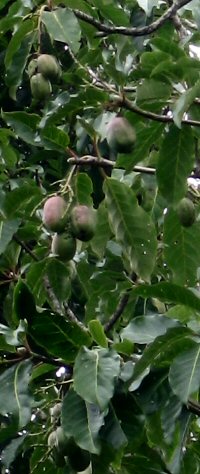 |
Diplopanax stachyanthus BSWJ11803 really baffled us, but there is no mistaking it once we were given its true identity (was Elaeocarpus) of a rare relic that survived the Ice Age. With its distinctive fruit (with ‘u’ shaped kernel) held in terminal panicles on a small evergreen tree with luxurious paddle-shaped foliage.
|
|
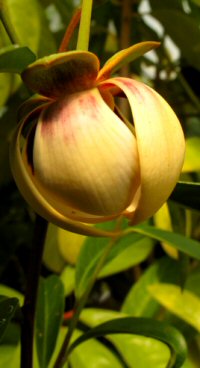
Disepalum petelotii BSWJ11690 will probably only appeal to the lovers of the unusual, until we have had a chance to trial this evergreen. It had an appeal that I found irresistible, with narrow thick textured foliage and long black fruit held in tight umbels, the result of their curious flowers which sound as they are well worth growing.
|
|
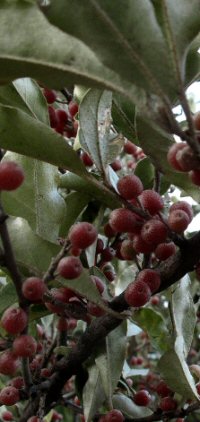
Elaeagnus umbellata CWJ12835 is a far more familiar plant, smothered in its red white speckled fruit when we found it on the island of Shikoku. Only forming small shrubs in the exposed conditions we found them in.
|
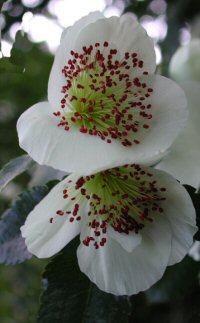 |
Meanwhile Eucryphia glutinosa valued for its autumnal colours, will be a welcomed newcomer. One of many seed accessions from Ness Botanical Gardens, where it forms small deciduous shrubby trees with pinnate foliage, smothered in their sizeable white flowers July-August.
|
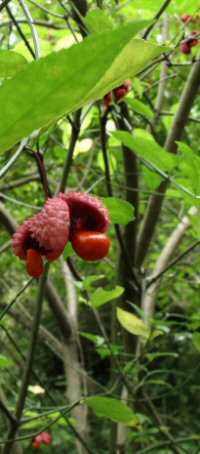 |
What is it about Euonymus that attracts so much attention all of a sudden? E. americanusa v. angustifolius BSWJ12905 was well worth going all that way to see growing in North Carolina, with its lanceolate foliage and fuzzy red fruit.
|
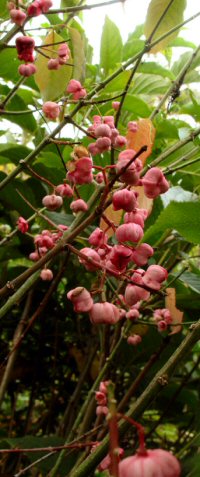 |
Whereas E. bungeanus BSWJ8782 inhabited the island of Cheju-Dõ, South Korea, where it had formed small trees with multiple stems bearing slender pointed serrulate foliage, while the pink fruit was abundant. A phenomena that according to some horticultural literature only occurs after a hot summer. We’ve never seen such a good show on the plants in our garden after this last summer!
|
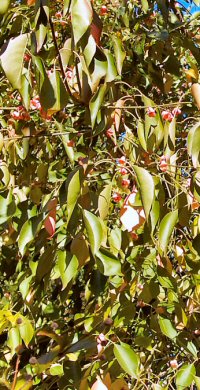 |
E. bungeanus v. semipersistens was also smothered in pink fruit when we saw it growing in the world famous JC Raulston Arboretum in North Carolina. This form retains its foliage for longer than the normal type.
|
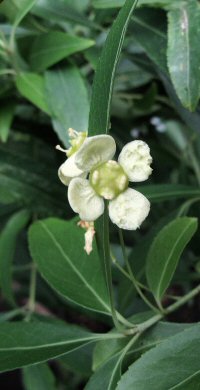 |
E. carnosus CWJ12425 was from a different environment altogether, in the high Central Mountains of north-eastern Taiwan. Here it formed a small tree only 2.2m tall, with a bare trunk at the base with many slender arching branches, laden with oblong-ovate serrated leaves and cymes of four-angled fruit on slender stalks.
|
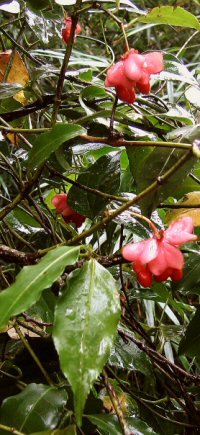 |
E. forbesiana HWJ890 was a collection from steep mountain forest on the slopes of Fansipan northern Vietnam, with broadly elliptic leathery crenate leaves. Bearing axillary clusters of pink 4-5 lobed fruit on long pendant pedicells.
|
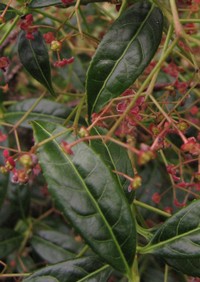 |
E. frigidus v. elongatus GWJ9378 is a charming very variable species often seen as a small to medium size shrub as we encountered with this collection in West Bengal in 2002. Where the arching slender stems of ovate-lanceolate serrulate leaves, appeared evergreen, but are deciduous in all but the very mildest climate. With the shortly winged pink seed capsules hanging on long slender branched stalks from their axils.
|
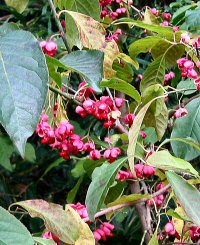 |
E. hamiltonianus ssp. sieboldianus BSWJ10941 formed a large open shrub with very large ovate-oblong leaves to 20cm long, where we collected the fruit of this showy species, on the north-west coast of Honshu, Japan in 2005. Dripping with unusual angular pink seed capsules splitting to reveal the bright red-orange aril-covered seed.
|
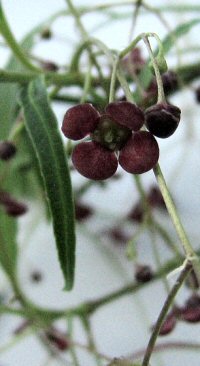 |
E. laxiflorus GWJ9351 is another small Himalayan shrub, with the shortly winged pink seed capsules hanging on long slender branched stalks from their axils, resulting from the reddish-purple flat four-petalled flowers held in luxurious quantities May to July.
|
|
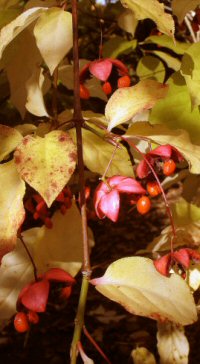
E. planipes BSWJ8660 is allegedly scarce in cultivation, primarily as it is so confused with other species in cultivation. A very distinct plant once one is properly introduced, affording good autumn colour early on if my memory serves me, with a generous display of ornamental fruit thrown in.
|
|
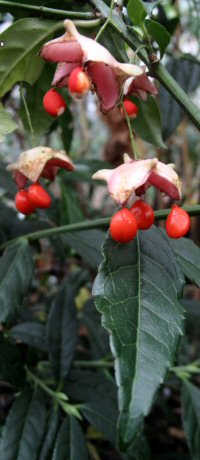
E. porphyreus GWJ9377 is a re-identification (E. theaefolius previously), all the same it is still a charming small evergreen shrub forming mounds of dark green glossy elliptical leaves, draped with masses of small purple-red flowers on very long wiry pendulous stalks in summer, transforming to decorative winged capsules by autumn when they burst open to reveal the pink aril covered seed.
|
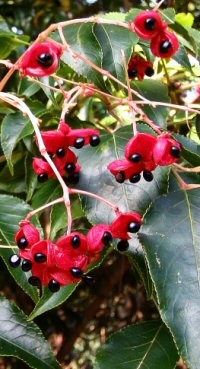 |
Euscaphis japonica BSWJ12739 & BSWJ11359 is seldom seen in cultivation, a dramatic member of the rue family, which has eluded my previous attempts to germinate. The hard seed is one of the ornamentation of this chunky shrubby small deciduous tree. As the jet black seed are surrounded by their red-bright pink fleshy capsules (in the similar manner to Euonymus) held in large panicles. That apart the dark green foliage is worth the effort alone.
|
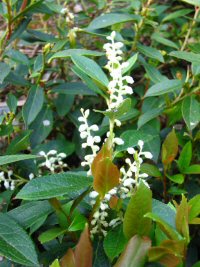 |
Gaultheria forrestii BWJ7809 was a collection from a lot further back, from a small evergreen shrub of arching branches, with terminal panicles of black fruit. Collected on my only visit to China in 2000.
|
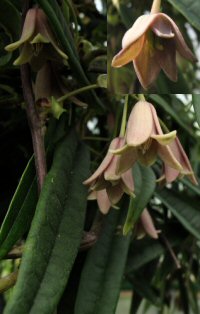 |
Holboellia latifolia v. angustifolia HWJK2419 is regarded as a synonym of H. angustifolia, but what do you call a form of H. latifolia that has long lanceolate foliage? A superb find on our decent from high altitude in eastern Nepal in 2002.
|
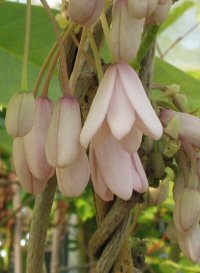 |
H. latifolia pale flowed from HWJK2213 demonstrates that we are familiar with the composition of H. latifolia flowers. It has been gratifying to be able to segregate this and the dark form from such a high altitude collection introducing some solid hardiness into cultivation.
|
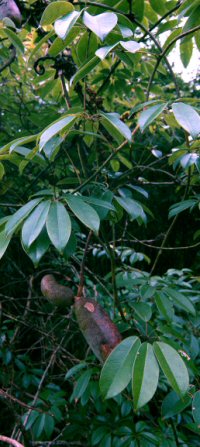 |
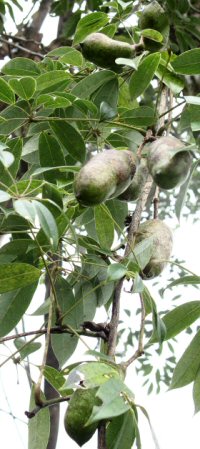
H. species from Vietnam FMWJ13171 was one of the brighter moments of that day’s collecting, as the rain was relentless. Heavily laden with long green purple tinted fruit and delicate 9-foliate compound leaves.
|
|
H. species from Vietnam FMWJ13333 was from a different valley, forming a larger plant over several trees and shrubs. With fruit in abundance, many in threes fused at their base some even longer than the previous. While the foliage was glossier above reticulated below, held in up to ten leaflets all on wiry thin stalks.
|
|
Hydrangea anomala ssp. petiolaris v. megaphylla BSWJ4400 & BSWJ8497is the first of many of the climbing Hydrangeaceae to be described. At last we seem to be getting somewhere, this is the variety found on the island of Ullüngdõ, South Korea, with larger foliage and inflorescences. While H. anomala ssp. petiolaris v. ovalifolia BSWJ8799 & BSWJ8846is the variety from Cheju-Dõ, South Korea.
|
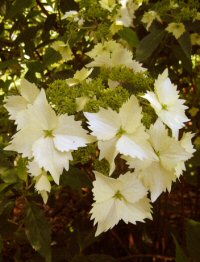 |
Please see our description at the end section of this plant list for more detail of H. chinensis 'Golden Crane' DJHC0499. Our stocks originating from cuttings I pinched from Dan Hinkley’s garden when he was away. At least it goaded him into doing something with it.
|
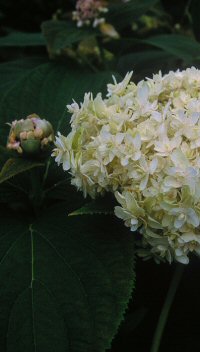 |
Also from cultivation this time from Japan are two cultivars of H. involucrata. ‘Plenissima’ bears corymbs of pale purple-pink centred sterile double flowers.
|
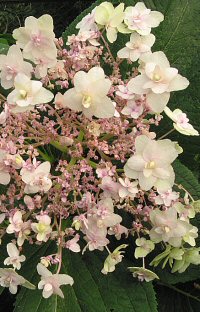 |
While H. ‘Yoraku’ has pale pink fertile flowers surrounded by double creamy coloured sterile florets in a looser corymb.
|
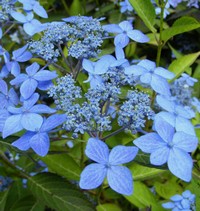 |
H. serrata 'Crûg Sõ Cool' BSWJ6241b is another one of our seedlings from Mt. Unzen area of Kyushu, Japan in 1998. This small cultivar forming flat topped cymes of blue flowers in acidic soils. Named formally at the end section of this plant list.
|
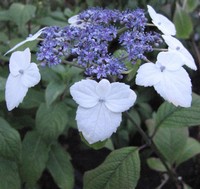 |
I am sadly unable to trace the origins of the clone of H. stylosa that we are introducing this year. We were given it many years ago as one of Beer & Lancaster's collections, but Roy has no record of such a find. All the same it is high time that this Himalayan equivalent of H. macrophylla was introduced, it certainly has the flowering power to make it popular..
|
|
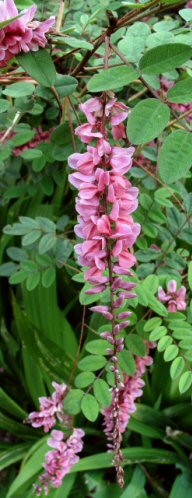
Flowering power certainly describes Indigofera howellii regarded by those that study these things, to be the most floriferous species, bearing pink spikes of pea flowers from April to October. Many thanks to Louisa Arbuthnott for making my acquaintance.
|
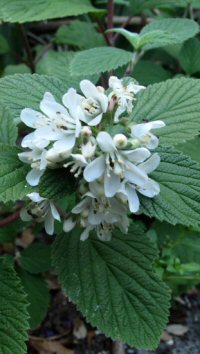 |
Jamesia americana is a rarity in cultivation. We grow a plant of it near our house where it flowers quietly every year, with cymes of white Deutzia-like flowers. It is reputedly difficult to propagate, ours are the result of seed sowing.
|
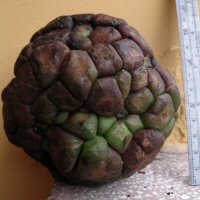 |
The fruit of Kadsura heteroclita FMWJ13385 & WWJ11947 have to be seen to be believed. Forming twinning woody-stemmed climbers with thick dark green glossy foliage and white to yellow flowers. The female flowers transforming to an aggregate of symmetrical elongated reddish berries, forming a globe like structure that is certainly larger than a cricket ball. All quite palatable too.
|
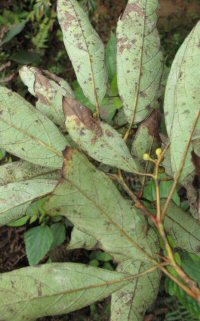 |
Lindera angustifolia FMWJ13156 was a fortunate find, growing in a small colony of small trees. The foliage was lanceolate, thin textured only 10 1.5cm, while the small black fruit were carried in axillary orbicular clusters.
|
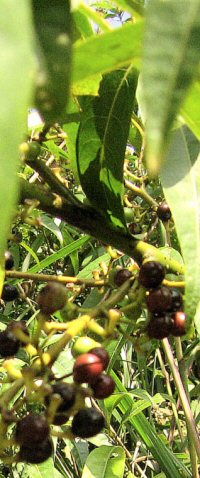 |
L. metcalfiana v. dictyophylla KWJ12312 was an earlier find, again with narrow foliage and small black glossy fruit all along the branches where the fragrant yellow flowers had made their display March- May.
|
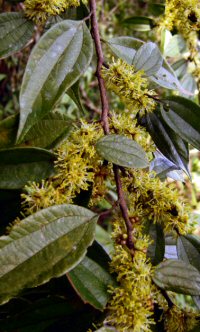 |
L. tonkinensis FMWJ13123 & DJHV06150 is far easier to distinguish, normally forming small to medium evergreen trees. With parchment textured ovate leaves distinctly 3-veined, these covered in gingery hair below. Winter flowering in the wild, but normally early spring for us, when the branches can be smothered in clusters of the small yellow flowers.
|
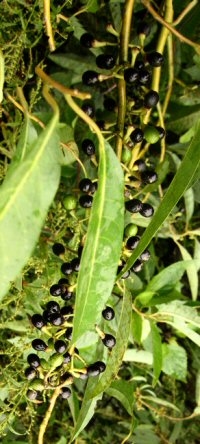 |
In the same family Litsea cubeba FMWJ13011 is a shrubby tree that is valued for its citrus scented oils. Like its close relatives it has long slender foliage with a conspicuous pale midrib. Great fun cleaning this fruit with all of that citrus aroma.
|
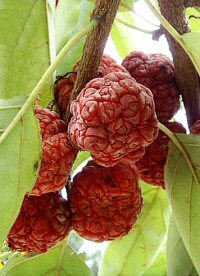 |
Lonicera tomentella BSWJ2654 has its identity at long last, still pretty small white flowers though. Maclura tricuspidata BSWJ12755 is one of the hardy relatives of the mulberry. With soft tri-lobbed leaves hiding the large stiff spines generally lurking below them. The fruit is a conspicuous aggregate of orange.
|
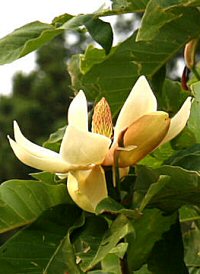 |
Magnolia hypoleuca BSWJ10836 & BSWJ 10821 may be well established in cultivation, but the fruit was difficult to find by the time we were in northern Honshu. Forming very impressive large leafed bloomy plants here.
|
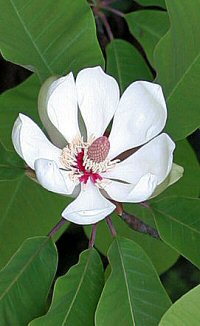 |
Our collection of M. obovata BSWJ12626 was from the island of Ullüngdõ, South Korea. Where certainly the mother plants looked quite different, having smaller thicker textured foliage more of a blue-grey, this time heavily laden with fruit.
|
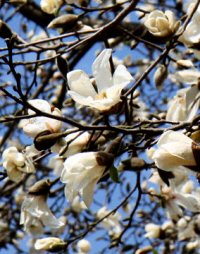 |
Back on the mainland we found a stand of M. kobus v. borealis BSWJ12751, shame the chip in my camera went faulty at that stage. Again it was difficult to make out what we were looking at, as there was so much orange fruit on the small trees.
|
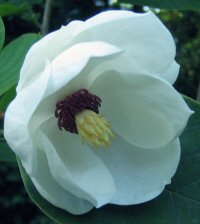 |
No mistaking M. sieboldii ssp. sieboldii BSWJ12553 it was at the top of our hit list. From as far north as we could venture we had set aside the time to find a good quantity of this beautiful variety with dark purple centres, that inhabits this area of Korea. We have a beautiful specimen from an earlier collection in our garden, initiating constant enquiries for plants.
|
|
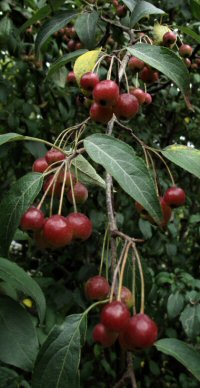
Malus sikkimensis BSWJ2431 has been absent from our list for some time, as we soon ran out of our original collections. Now that ours are mature they are bearing fruit/seed which have germinated this time around.
|
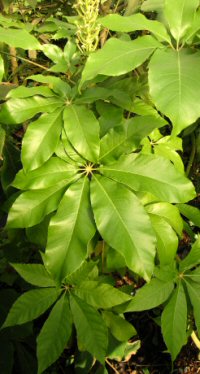 |
Oreopanax incisus BSWJ10669 was introduced last year under its old name of O. floribundus. O. xalapensis BSWJ10444 on the other hand will be new, originating from Guatemala (hence the epithet, pronounced ‘’shela’’ for the old capital). We commonly see fruiting Schefflera-like branches used as Christmas decoration, usually sprayed silver or gold. The white pendant fruiting spikes staying on the shrubs over the winter until ripe.
|
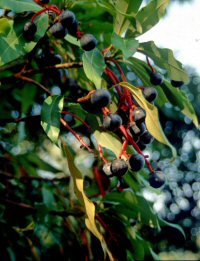 |
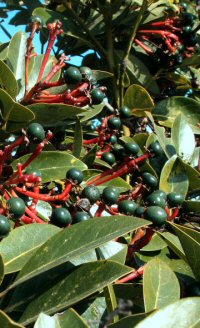
Persea japonica BSWJ8410 & BSWJ12789 takes us back to the bay family. We returned to this exquisite small evergreen tree with eye catching exfoliating bark growing in Ch'õllip'o Arboretum in South Korea in 2010. To gather more of its glossy black globose fruit held on long bright red stalks.
|
 |
We were fortunate to find plenty of fruit of P. thunbergii BSWJ12747 in the field, but only relatively small plants of shrubby proportions. Maybe it was the drier conditions they seemed to grow in, but there was plenty of fruit on them all the same.
|
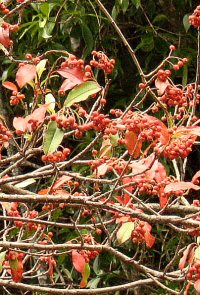 |
Photinia niitakayamensis CWJ12435 should be one of the hardiest evergreen species, as this is a common plant at around 3,000m in the Central Mountains of Taiwan. With narrow pale green foliage and the long lasting orange fruit.
|
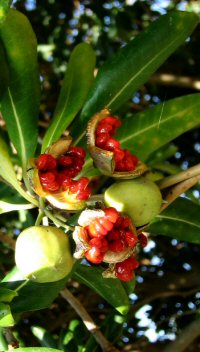 |
Pittosporum tobira BSWJ12758 is another collection from the coastal area of Wan-Dõ South Korea. An invaluable evergreen bushy shrub, with glossy dark green leaves.
|
|
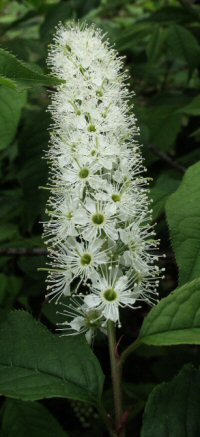
Prunus grayana BSWJ10903 has formed a charming small well branched tree for us, sited in our autumn garden. Here the spikes of black fruit contrast well with the autumnal yellow of this bird cherry.
|
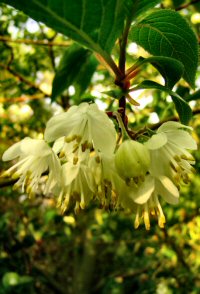 |
One of our most impressive introductions Rehderodendron indochinensis BSWJ11841, KWJ12310, BSWJ11805, & WWJ11981 has proved to be unflinching in its hardiness here. Nicknamed as Styrax on steroids here, they have proved to be difficult to introduce. Forming large ancient trees in the wild with narrow serrulate foliage, the ground surrounding them strewn with their large woody seed in autumn. $860 US, in excess baggage charge was the cost of bringing them and a few others home. That apart its taken five years to germinate the seed, naturally we will be giving one to each customer free of charge when they spend £5.
|
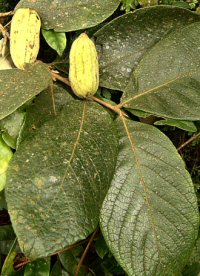 |
R. kweichowense WWJ12019 is easily identified by its distinct broad foliage covered in soft stellate hair, as are the new shoots and even the large sausage shaped longitudinally ribbed seed. These seemed to form smaller trees where we found them growing in the mountain forests of northern Vietnam.
|
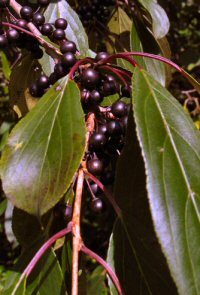 | Rhamnus dahurica BSWJ12609 formed a large shrub of long arching branches of glossy oblong serrulate leaves, conspicuously veined. Weighted down by a heavy crop of small black orbicular fruit at that time. Many of our Rhododendron collections will be available once more, mostly originating from the same seed collections that have been available in the past.
|
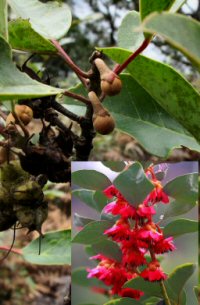 |
Rhodoleia championii BSWJ11603 & WWJ11858 will be our final addition of this choice Hamamelidaceae. Easily confused with Daphniphyllum in the wild when not in fruit/flower as the dark glossy foliage is also white below. Destined to be one of our most cherished plants when they start exhibiting their bright pink or red flowers.
|
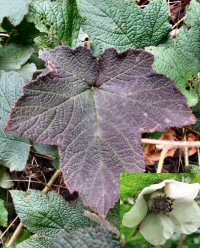 |
Rubus alceifolius BSWJ1833 is an evergreen scandent shrub from the Taipingshan area of northern Taiwan. With white flowers followed by orange fruit held in the axils of the smoky coloured rugose palmate leaves. We find they make an unusual ground cover in shaded areas.
|
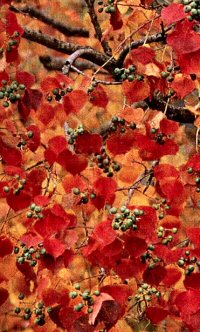 |
Sapium sebiferum CWJ12819 in contrast thrives in sun, only forming small trees where we found the unusual racemes of waxy seed. Autumn colour is also a huge bonus on this so called tallow tree.
|
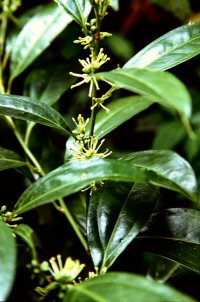 |
It took some considerable effort to track down Sarcococca vagans BSWJ9760 & BSWJ9466 into the mountain forests close to Dalat in southern Vietnam. Well removed from what is purported to be the same species in northern most Thailand, that we collected as S. balansae.
|
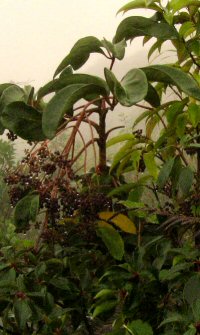 |
We fear there will be confusion with the nomenclature of Schefflera aff. alpina large leaf WWJ11999. It is clearly related to S. alpina the foliage emerging with the same purple colouration, indicative of this group. But the form and habit are very distinct, with the thicker textured larger foliage, a result of evolving in the more exposed habitat that we find it. Only seen as small shrubs 2m or less with few if any branches.
|
|
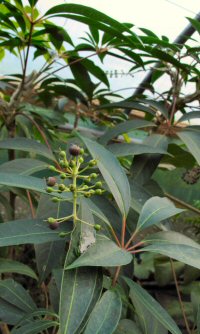
S. taiwaniana × gracilis are hybrids arising in our garden that are easily mistaken for its Taiwanese parent, but for the fact that they are ultimately shorter and start flowering and fruiting within a year or two.
|
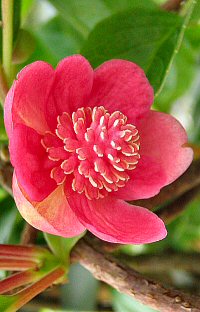 |
Schisandra incarnata BSWJ7898 has only been available as part of one of our hybrids within this group of woody twinning climbers that encompass the showiest of the genus. Possessing all the admirable qualities of the group with the added attraction of deep blood red flowers in this species.
|
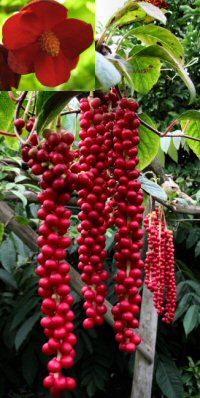 |
Staying within the group S. rubriflora 'Bodnant Redberry' was named formally in our 2012 plant list, as a female clone that we acquired some time ago from Bodnant Gardens. It’s such a shame that all of the male plants we purchased turned out to be female as well! If the professionals cannot tell the difference what hope is there?
|
|
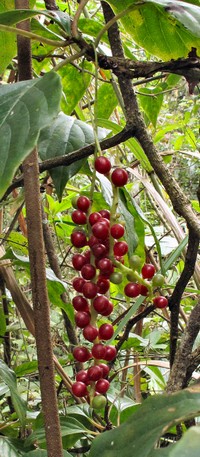
Our latest find is S. perulata FMWJ13100 with more persistent thicker textured foliage while the flowers are recorded as being yellow or red. It was an incredible feeling after scaling one of the precarious limestone pinnacles that we find in northern Vietnam, pushing through the undergrowth and emerging in a magical grove filled with the long strings of red fruit some highlighted by ribbons of bright sunlight.
|
|
S. fauriei
S. molle
|
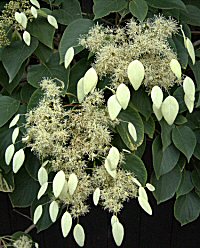
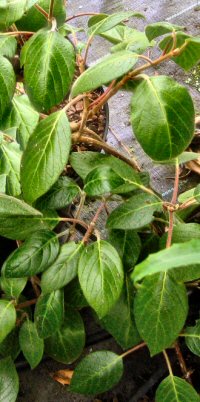
Schizophragma appears to be going through a nomenclature catching up period even more so than their hydrangea counterparts. None of the following are new entries in their own rights, but merely name changes. Hence S. fauriei is recognised at species level, while S. hydrangeoides v. concolor BSWJ5954 is recognition at varietal level for the forms we find growing in Kyushu with chalky white undersides to the foliage, as found in the cultivar 'Moonlight'. S. hydrangeoides v. taqueti BSWJ8771 & 'Cheju's Early' BSWJ1160 is the variety that was distributed as quelpartensis at either species or varietal level. S. hydrangeoides v. ullungdoense BSWJ8505 & BSWJ8522 is a new variety covering the distinct variety that is endemic to the Korean island of Ullüngdõ. Hailing from another island this time the Japanese Yakushima, S. hydrangeoides v. yakushimense BSWJ6119 is deemed distinct enough to attain varietal status. S. integrifolium BWJ8150 on the other hand is my bad penny, undergoing what should be its final identification. This is the problem when you run out of suitable wall space for planting, although after gutting a suitable barn we have finally managed to plant a specimen. Almost of the same currency is what is allegedly the definitive identification of S. molle the entity we find in the north of Vietnam previously offered as S. aff. elliptifolium. Although I must admin that I am not 100% on this one until I have intact inflorescences to study (more difficult to obtain that you think) as we have seen all sorts in the wild. All the same it is very distinct from anything else in cultivation at this time.
|
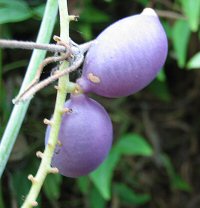 |
Sinofranchetia chinensis DJHS4117 is another gift from our friend in Seattle. Where its chalk covered twinning stems have formed a large tangle of plants by the entrance to his new estate.
|
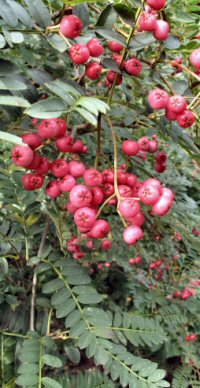 |
Sorbus pseudovilmorinii is one of many species entrusted to us by Ness BG. This pink fruiting slender small tree will be valued in smaller gardens, particularly in the drier areas of the country.
|
|
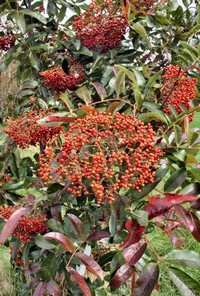
Requiring more space S. sargentiana EGM291 is well appreciated for those distinct sticky winter buds and red summer fruit.
|
|
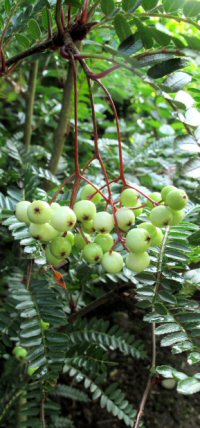
Maybe less familiar to most is S. setschwanensis BWJ8053 which has been growing in our fields for some time, only forming a single stemmed slender shrub for us to date with delicately small glossy pinnate leaves availing some interesting autumnal hues as well as corymbs of white fruit.
|
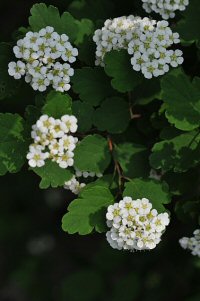 |
Spiraea blumei CWJ12829 was acting more like a perennial where we found it growing on irregular cliffs and ledges, mostly with a pendant habit in those conditions. Giving us a glimpse of the pale undersides to the small deeply indented almost palmate small leaves, some plants still retaining some of their white flowers.
|
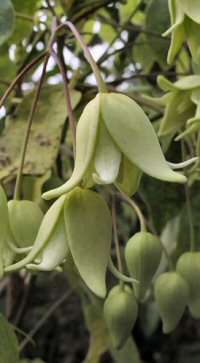 |
Stauntonia aff. libera KWJ12218 is the identity that the world authority of this family has agreed with, although I am still a little hesitant as we have only seen male flowers to date.
|
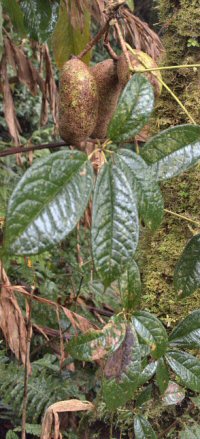 |
S. chapaensis FMWJ13055 is our field identification for one of our new gatherings from deep within a mountain forest in northern Vietnam. Where the 5-foliate leaves draped a sizeable vine bearing large rough textured sausage-shaped fruit.
|
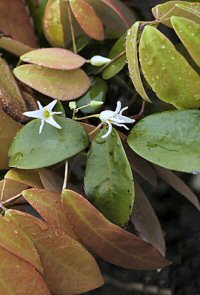 |
S. obovata CWJ12353 was a collection from the mountains in the very north of Taiwan, a twining climber, which was scrambling to 7-8m over small trees, with 5-7 leafleted pointed leathery leaves pale maculated below.
|
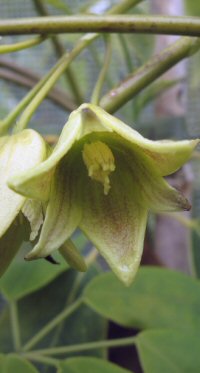 |
We cannot speculate as to the identity of S. species nova from Vietnam FMWJ13177, although it may turn out to be the same as KWJ12218. It certainly had some yellow in the fruit, time will tell.
|
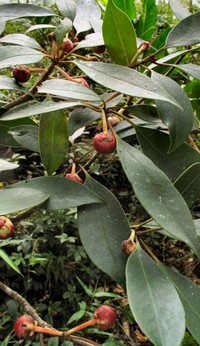 | Members of the tea family are virtually guaranteed some ornamentation, Ternstroemia aff. chapaensis WWJ11918 is our first attempt to evaluate what was in the wild a small tightly congested shrub. Easily mistaken for a dwarf Rhododendron in those conditions on high altitude exposed ridges, looking more lax in our containers.
|
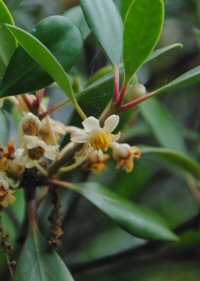 |
At the other end of the scale T. gymnanthera forms a small tree with dark green leathery leaves held on red petioles. Should be a lovely foil for the white flowers normally carried in July.
|
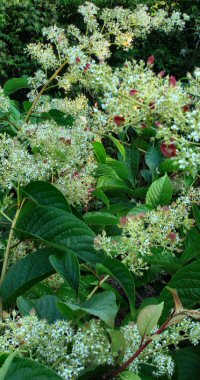 |
Tripterygium aff. doianum CWJ12852 is still too young to flower for us to confirm its identity as this rare species. It would appear that the more common T. regelii is sadly practically unknown in gardens in spite of being very hardy.
|
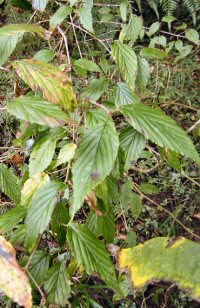 |
Viburnum formosanum CWJ12460 was a distinct form where we found it growing amongst dense vegetation in the northern forests of Taiwan. With long arching gingery branches of bronzed lobed foliage. From a much colder Lachen Valley in northern Sikkim V. mullaha BSWJ2251a & GWJ9227 has a new identity, many thanks to Julian Shaw for all his work with so many of our collections.
|